New Albany is an incorporated city and the county seat of Floyd County, Indiana, about 4 miles west of downtown Louisville across the Ohio River. The city was founded in 1813 and has been the county seat since 1819. Its downtown, the Mansion Row Historic District on Main Street, and a riverfront trail are all within a few blocks of each other. The Sherman Minton Bridge on Interstate 64 connects it to Louisville.
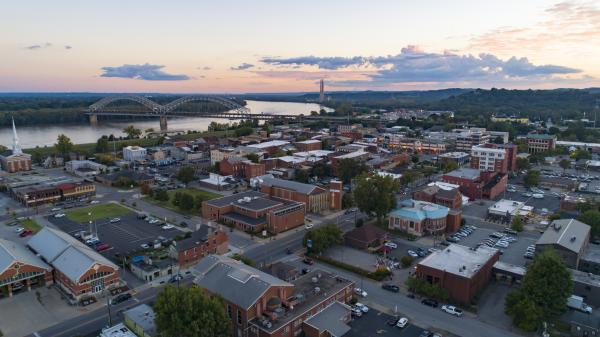
Downtown New Albany is a grid of brick commercial blocks along Spring, Pearl, Market, and Main Streets. Bicentennial Park, at the corner of Spring and Pearl, hosts free summer concerts. The former Carnegie library on East Spring Street is now a cultural arts center run by the Floyd County Library, with local history exhibits.
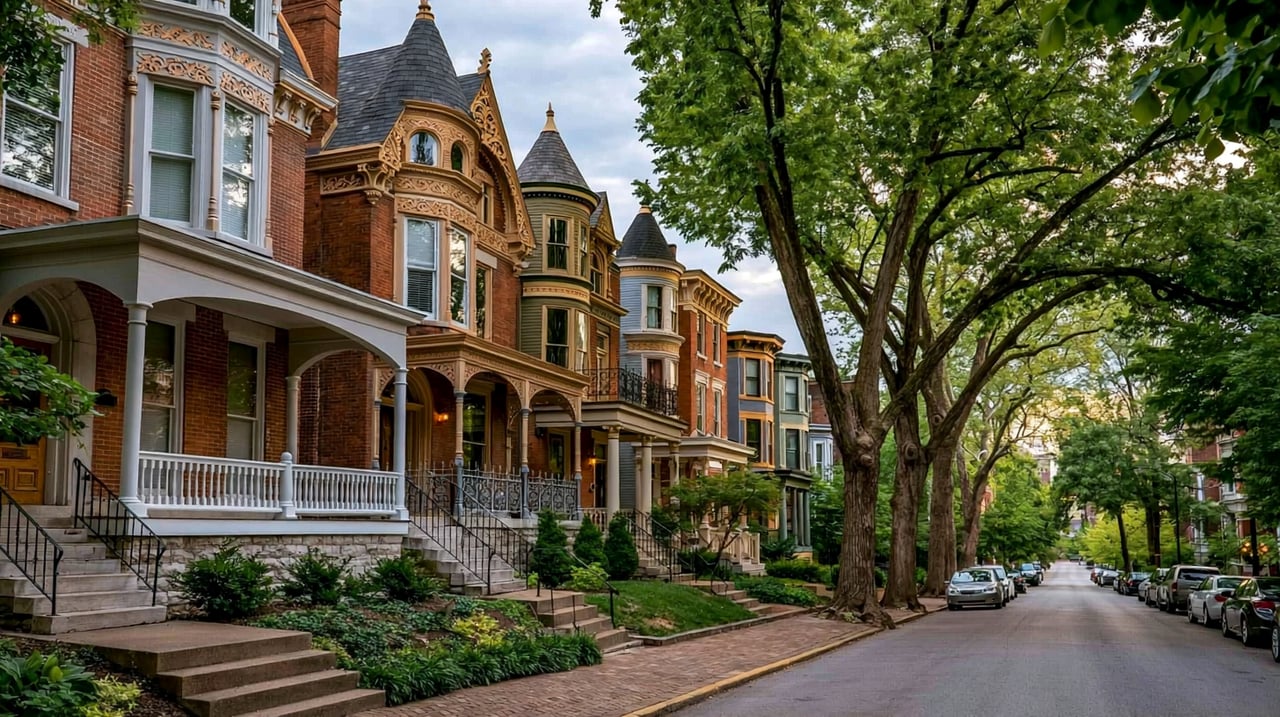
East of State Street, Main Street becomes Mansion Row. This National Register district runs along Main Street from State Street to 15th Street, with a smaller section on Market Street. The Culbertson Mansion, a Second Empire house finished in 1869, is now a state historic site. Along the river, a floodwall separates downtown from the Ohio River Greenway and the New Albany Riverfront Amphitheater.
The oldest housing is in and near downtown: 1800s brick and frame houses, including the large homes of Mansion Row and the Scribner House, the city's first frame house, built in 1814. Beyond the historic core, streets fill with early and mid-1900s houses on city lots. Farther from the river, newer neighborhoods and subdivisions spread north toward the knobs.
Interstate 64 crosses the Ohio River on the Sherman Minton Bridge, which also carries U.S. 150. Interstate 265 begins at I-64 on the north side of the city and runs east toward Clarksville and Jeffersonville. State Road 111 starts at Main and State Streets and follows the river south toward Harrison County. Downtown Louisville is about 10 minutes away without heavy traffic.
Park downtown near Bicentennial Park and walk Pearl Street to Main Street. Head east on Main Street through Mansion Row to the Culbertson Mansion, then circle back to the riverfront amphitheater and the Greenway to watch the light fade behind the Sherman Minton Bridge.
Is New Albany its own city?
Yes. New Albany is an incorporated city in Indiana and the county seat of Floyd County. It is not part of Louisville, which is in Kentucky across the Ohio River.
How far is New Albany from downtown Louisville?
About 4 miles. The drive across the Sherman Minton Bridge on Interstate 64 takes about 10 minutes without heavy traffic.
Which school district serves New Albany?
New Albany is served by the New Albany-Floyd County Consolidated School Corporation, which covers all of Floyd County.
New Albany borders Clarksville to the east, with Jeffersonville just beyond. The hills of Floyds Knobs rise to the northwest, and Georgetown is west on Interstate 64. Harrison County lies to the southwest, and Louisville is across the river.
Properties
A live look at the market, updated every 15 minutes. Tap any home to book a tour.
49,144 people live in New Albany, where the median age is 40.1 and the average individual income is $34,936. Data provided by the U.S. Census Bureau.
Total Population
Median Age
Population Density Population Density This is the number of people per square mile in a neighborhood.
Average individual Income
New Albany has 20,669 households, with an average household size of 2.31. Data provided by the U.S. Census Bureau. Here’s what the people living in New Albany do for work — and how long it takes them to get there. Data provided by the U.S. Census Bureau. 49,144 people call New Albany home. The population density is 1,091 and the largest age group is Data provided by the U.S. Census Bureau.
Total Population
Population Density Population Density This is the number of people per square mile in a neighborhood.
Median Age
Men vs Women
Population by Age Group
0-9 Years
10-17 Years
18-24 Years
25-64 Years
65-74 Years
75+ Years
Education Level
Total Households
Average Household Size
Average individual Income
Households with Children
With Children:
Without Children:
Marital Status
Blue vs White Collar Workers
Blue Collar:
White Collar:
Connecting you to the area
Guides to what each area is like to live in, what is for sale, and what homes are selling for.