Crescent Hill is an east Louisville neighborhood built along Frankfort Avenue, about 4 miles east of downtown Louisville in Jefferson County, Kentucky. It stretches from roughly North Ewing Avenue east to the St. Matthews city line, between Brownsboro Road and Lexington Road, with Frankfort Avenue through the middle. Its landmarks include the 1879 Crescent Hill Reservoir and gatehouse, the 1908 Crescent Hill library, and the shops and restaurants along Frankfort Avenue. Much of it is in the Crescent Hill Historic District, listed on the National Register in 1982.
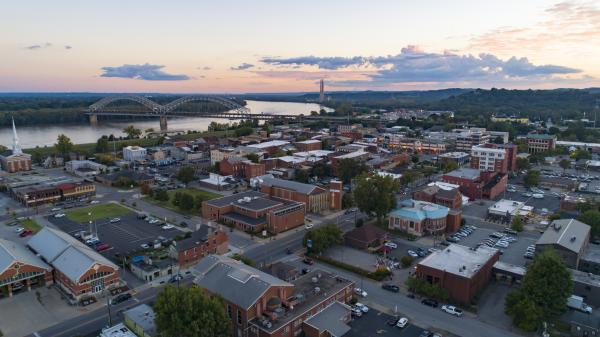
Frankfort Avenue is one of the old roads east out of the city, and a rail line still runs alongside it. Today the avenue is lined with locally owned restaurants, coffee shops, bookstores, antique and consignment shops, most in one- and two-story buildings. The side streets north and south of the avenue are residential and tree-lined.
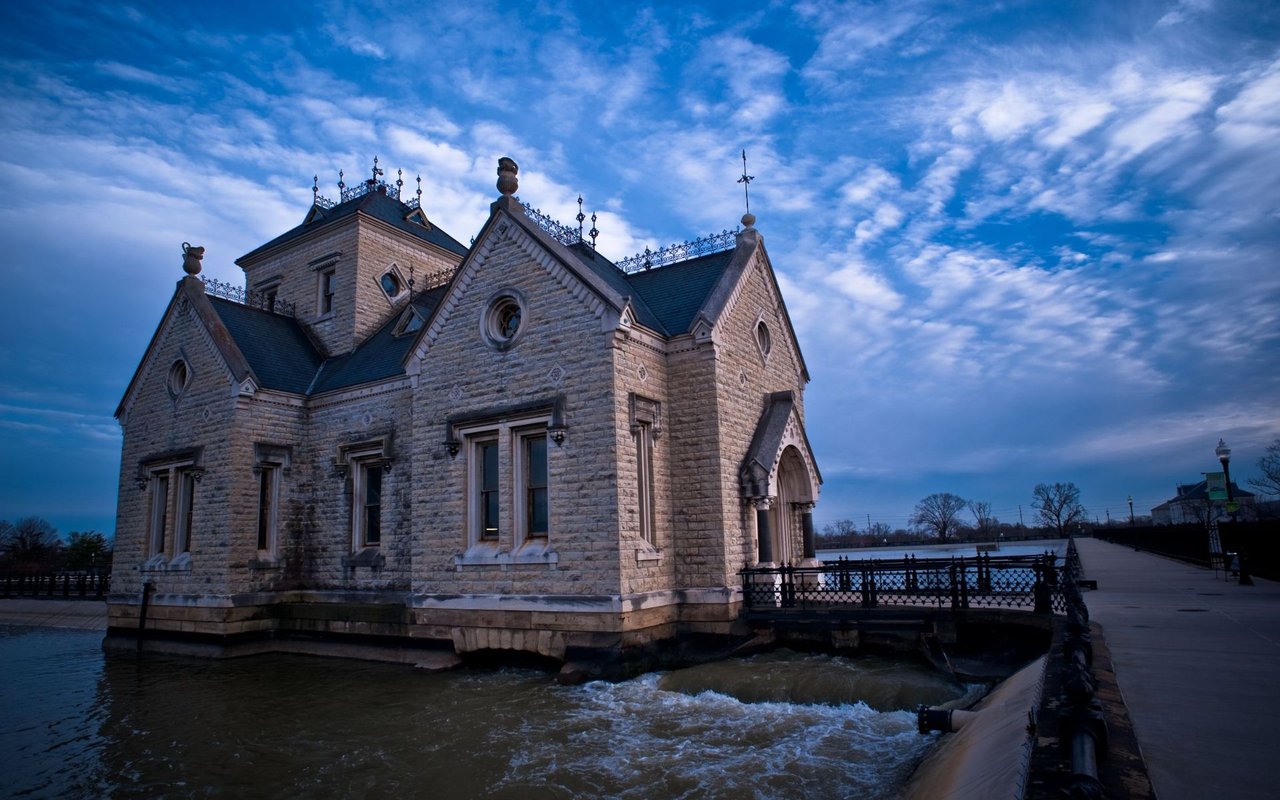
On the north side of Frankfort Avenue, the Crescent Hill Reservoir is a raised basin with a walking path on top. Its Gothic-style gatehouse, modeled on a castle along the Rhine, still controls water flow for Louisville Water. Across Frankfort Avenue, near Stilz Avenue, is Louisville Water's Crescent Hill Water Treatment Plant, which is part of the historic district.
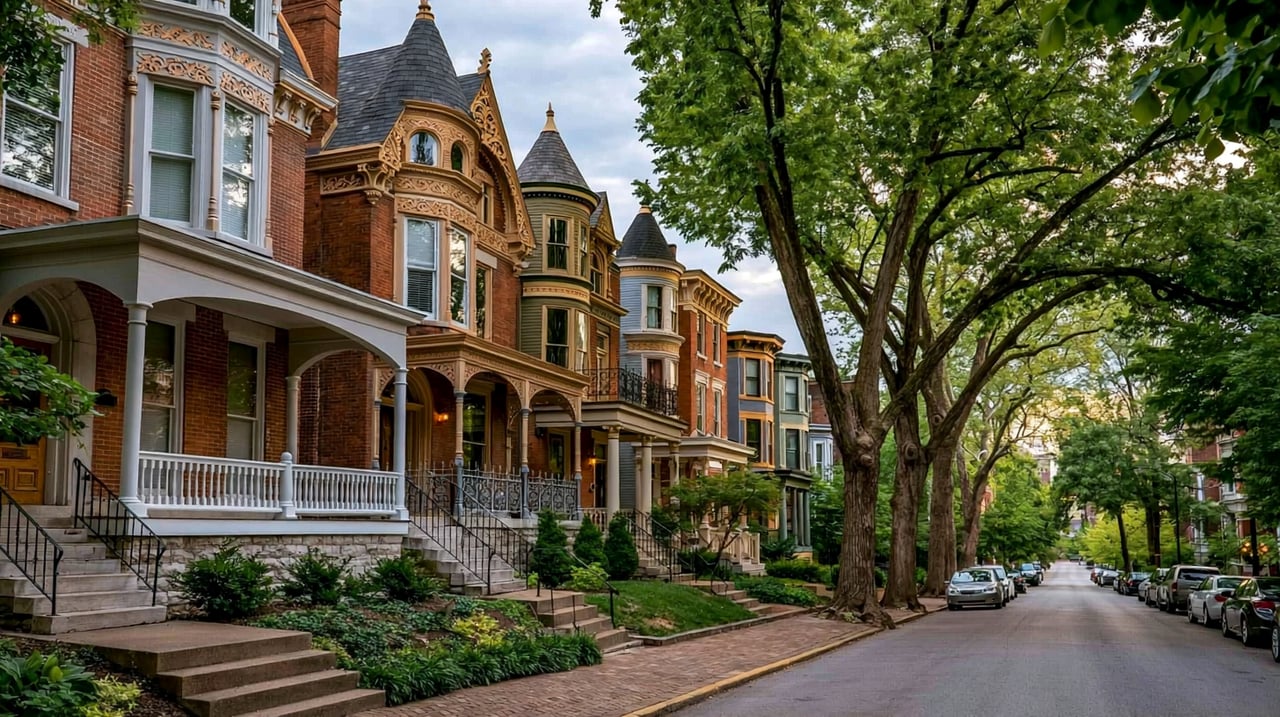
Most homes were built between 1890 and 1920, when the neighborhood grew fastest. Colonial Revival and Classical Revival styles are common, along with Victorian-era houses. A few homes are older, such as the 1869 Peterson-Dumesnil House.
Three main roads run east to west: Brownsboro Road on the north, Frankfort Avenue through the middle, and Lexington Road on the south. Ewing Avenue marks the west side, and St. Matthews begins to the east. Downtown Louisville is about 10 to 15 minutes by car without heavy traffic. TARC buses serve parts of the area; check ridetarc.org for current routes.
Park near the reservoir on Reservoir Avenue and walk the loop. Then cross to Frankfort Avenue and walk west past the library at Birchwood Avenue, browsing the shops along the way. If you have time, drive to the Peterson-Dumesnil House on South Peterson Avenue to see an 1869 house that is older than most of the neighborhood.
Is Crescent Hill its own city?
No. Crescent Hill is a neighborhood inside Louisville, which has shared one government with Jefferson County since 2003. St. Matthews, just to the east, is a separate city.
How far is Crescent Hill from downtown Louisville?
Crescent Hill is about 4 miles east of downtown. The drive takes about 10 to 15 minutes without heavy traffic.
Which school district serves Crescent Hill?
Jefferson County Public Schools (JCPS) is the public school district for Crescent Hill.
Clifton is just west along Frankfort Avenue, and St. Matthews is just east. The Highlands and Cherokee Triangle are a short drive south past Cherokee Park.
Properties
A live look at the market, updated every 15 minutes. Tap any home to book a tour.
7,537 people live in Crescent Hill, where the median age is 40 and the average individual income is $65,729. Data provided by the U.S. Census Bureau.
Total Population
Median Age
Population Density Population Density This is the number of people per square mile in a neighborhood.
Average individual Income
Crescent Hill has 3,534 households, with an average household size of 2. Data provided by the U.S. Census Bureau. Here’s what the people living in Crescent Hill do for work — and how long it takes them to get there. Data provided by the U.S. Census Bureau. 7,537 people call Crescent Hill home. The population density is 5,357 and the largest age group is Data provided by the U.S. Census Bureau.
Total Population
Population Density Population Density This is the number of people per square mile in a neighborhood.
Median Age
Men vs Women
Population by Age Group
0-9 Years
10-17 Years
18-24 Years
25-64 Years
65-74 Years
75+ Years
Education Level
Total Households
Average Household Size
Average individual Income
Households with Children
With Children:
Without Children:
Marital Status
Blue vs White Collar Workers
Blue Collar:
White Collar:
Connecting you to the area
Guides to what each area is like to live in, what is for sale, and what homes are selling for.