Butchertown is Louisville's old meatpacking district, a historic neighborhood just east of downtown in Jefferson County, Kentucky, less than 2 miles from Fourth and Main. Louisville Metro's Butchertown Preservation District is bordered by the Ohio River to the north, Interstate 65 to the west, Main Street to the south, and Mellwood Avenue and Beargrass Creek to the east. It grew in the 1800s around stockyards and packing houses, and today homes still share its streets with industrial and commercial buildings.
East Washington Street is the historic center line of the neighborhood, with Story Avenue running northeast toward Mellwood Avenue. Shotgun houses and other small homes share blocks with older commercial and industrial buildings. Beargrass Creek winds through the area on its way to the Ohio River.
In recent decades, many old buildings now house restaurants, shops, breweries and offices. Lynn Family Stadium opened on Adams Street in 2020, with new apartments nearby. The interstates and the Kennedy Interchange run along the west side, between Butchertown and downtown.
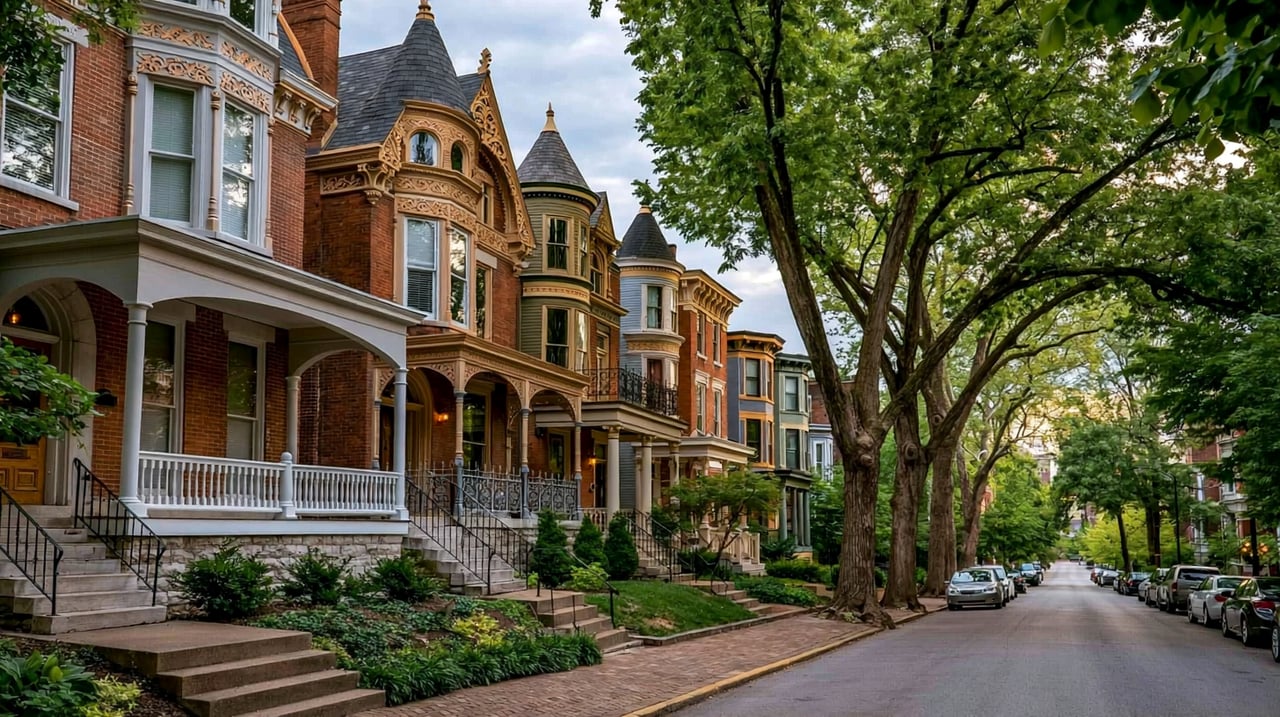
Homes range from modest 1800s shotgun houses to more detailed Italianate and Victorian houses with Eastlake trim. Some older houses are Greek Revival. Newer apartment buildings have been added near the stadium. Butchertown is both a National Register historic district, first listed in 1976 and expanded in 2019, and a Louisville local preservation district designated in 2003, so most exterior changes go through design review.
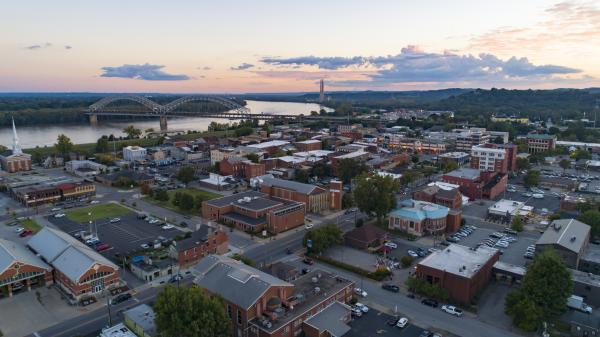
Main Street, Washington Street and Story Avenue are the main streets, with Mellwood Avenue and River Road on the edges. Interstates 64, 65 and 71 meet at the Kennedy Interchange on the west side. Downtown Louisville is about 5 minutes by car without heavy traffic, and much of the neighborhood is within walking distance of downtown. The Big Four Bridge gives walkers and cyclists a direct route to Indiana.
Start at the Thomas Edison House on East Washington Street. Walk east along Washington Street to see the shotgun houses and older commercial buildings, then head north to Lynn Family Stadium on Adams Street. Finish with a walk to Waterfront Park and the Big Four Bridge.
Is Butchertown its own city?
No. Butchertown is a neighborhood inside Louisville, which has shared one government with Jefferson County since 2003.
Is Butchertown a historic district?
Yes. The Butchertown Historic District was listed on the National Register of Historic Places in 1976, with a boundary increase in 2019. Louisville also made it a local preservation district in 2003.
Which school district serves Butchertown?
Jefferson County Public Schools (JCPS) is the public school district for Butchertown.
NuLu is just south across Main Street. Clifton is east past Mellwood Avenue, and The Highlands begins a short drive southeast at Baxter Avenue. Across the Big Four Bridge is Jeffersonville, Indiana.
Properties
A live look at the market, updated every 15 minutes. Tap any home to book a tour.
1,308 people live in Butchertown, where the median age is 40 and the average individual income is $53,618. Data provided by the U.S. Census Bureau.
Total Population
Median Age
Population Density Population Density This is the number of people per square mile in a neighborhood.
Average individual Income
Butchertown has 824 households, with an average household size of 2. Data provided by the U.S. Census Bureau. Here’s what the people living in Butchertown do for work — and how long it takes them to get there. Data provided by the U.S. Census Bureau. 1,308 people call Butchertown home. The population density is 3,086 and the largest age group is Data provided by the U.S. Census Bureau.
Total Population
Population Density Population Density This is the number of people per square mile in a neighborhood.
Median Age
Men vs Women
Population by Age Group
0-9 Years
10-17 Years
18-24 Years
25-64 Years
65-74 Years
75+ Years
Education Level
Total Households
Average Household Size
Average individual Income
Households with Children
With Children:
Without Children:
Marital Status
Blue vs White Collar Workers
Blue Collar:
White Collar:
Connecting you to the area
Guides to what each area is like to live in, what is for sale, and what homes are selling for.